
Tulane Health Equity Institute
We work to enhance human health by engaging communities and populations and serving as a resource for education and training.
Institute Overview
The institute is comprised of projects and individuals who explore unjust patterns in the distribution of disease that are avoidable and preventable. We work to enhance human health through engagement of disadvantaged communities and populations and to serve as a resource for education and training, especially in the Gulf South.
Health inequities have a very real and often deadly cost to human life, evidenced by the declining life expectancy of adults in the United States. These inequities also place an economic burden on communities and states across the country. The costs of racial and ethnic health inequities are staggering. These inequities cost the United States economy $451 billion in 2018, according to a new study published in JAMA by Tulane University researchers, helmed by Thomas LaVeist, dean of the School of Public Health and Tropical Medicine.
According to the National Academy of Sciences, the inequitable distribution of these social determinants matters more than health care alone in attaining quality health. Societal structures, institutions, policies and the environment can play a profound role in generating health inequities. These social determinants shape health trajectories starting in utero and continue across the lifespan. Research on the social determinants of health is still an emerging field, with much of this research being conducted only within the last 20 years.
Interested in working with us? Click the button to get started.
Partners and Projects

Health inequities have a very real and often deadly cost to human life, evidenced by the declining life expectancy of adults in the United States. These inequities also place an economic burden on communities and states across the country.

In response to the need for evidence in the field of arts in public health, we are working with faculty and artists across the country to explore the development of a Core Outcomes Set. These core outcomes would support the design, implementation, and evaluation of arts interventions.

Partners for Advancing Health Equity (P4HE Collaborative) is a research learning collaborative designed to spark discussion, share learning, foster collaboration, and facilitate resource exchange

The Society, Health, and Racial Equity (SHARE) Lab serves as a forum for research on health and social equity, and the role of racism in generating and perpetuating injustices in health.
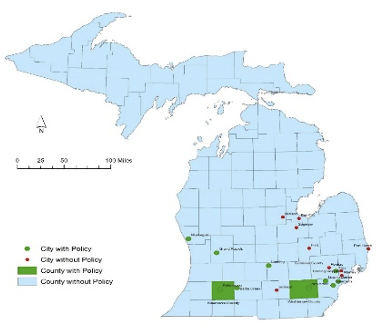
Dr. Smart facilitates a student-led effort to characterize police use of force policies and their impact on citizens, starting with the state of Michigan.

Dr. Mieka Smart co-authored this National Academies report outlining recommendations for preventing alcohol-involved sexual assault, released in January 2026.

Partners for Advancing Health Equity supports Health Equity Scholars for Action (HES4A), providing programming on research enterprise strategy, communication, and leadership.

We are working with HTAi to find effective ways to embed health equity into frameworks for innovative medical technologies and to address disparities that contribute to surgical care deserts.
The Health Equity Fellowship (HEF)

Equal Opportunity Notice
Tulane University is an equal opportunity educator and employer committed to providing an education and employment environment free of unlawful discrimination, harassment, and retaliation. Legally protected demographic classifications (such as a person’s race, color, religion, age, sex, national origin, shared ancestry, disability, genetics, veteran status, or any other characteristic protected by applicable federal, state or local laws) are not relied upon as an eligibility, selection or participation criteria for Tulane’s employment or educational programs or activities.